
Hip Squeezes, Counter-Pressure, and Rebozo: Physical Comfort Techniques a Birth Doula Brings to Labour here in Singapore
One of the questions I get asked most in prenatal meetings is: "But what do you actually do with your hands during labour?" This is the honest answer.
A lot of what I bring into the birth room isn't visible in the way people expect. It's not a script, and it's not a checklist. It's a set of physical, hands-on techniques I've practised for years, adjusted in the moment to what a labouring body is actually telling me it needs. Hip squeezes, counter-pressure, and rebozo work are three of the tools I reach for most, and I want to walk you through what they are, why they help, and what it feels like when I use them.
Counter-Pressure: Working Against the Pain, Not Around It
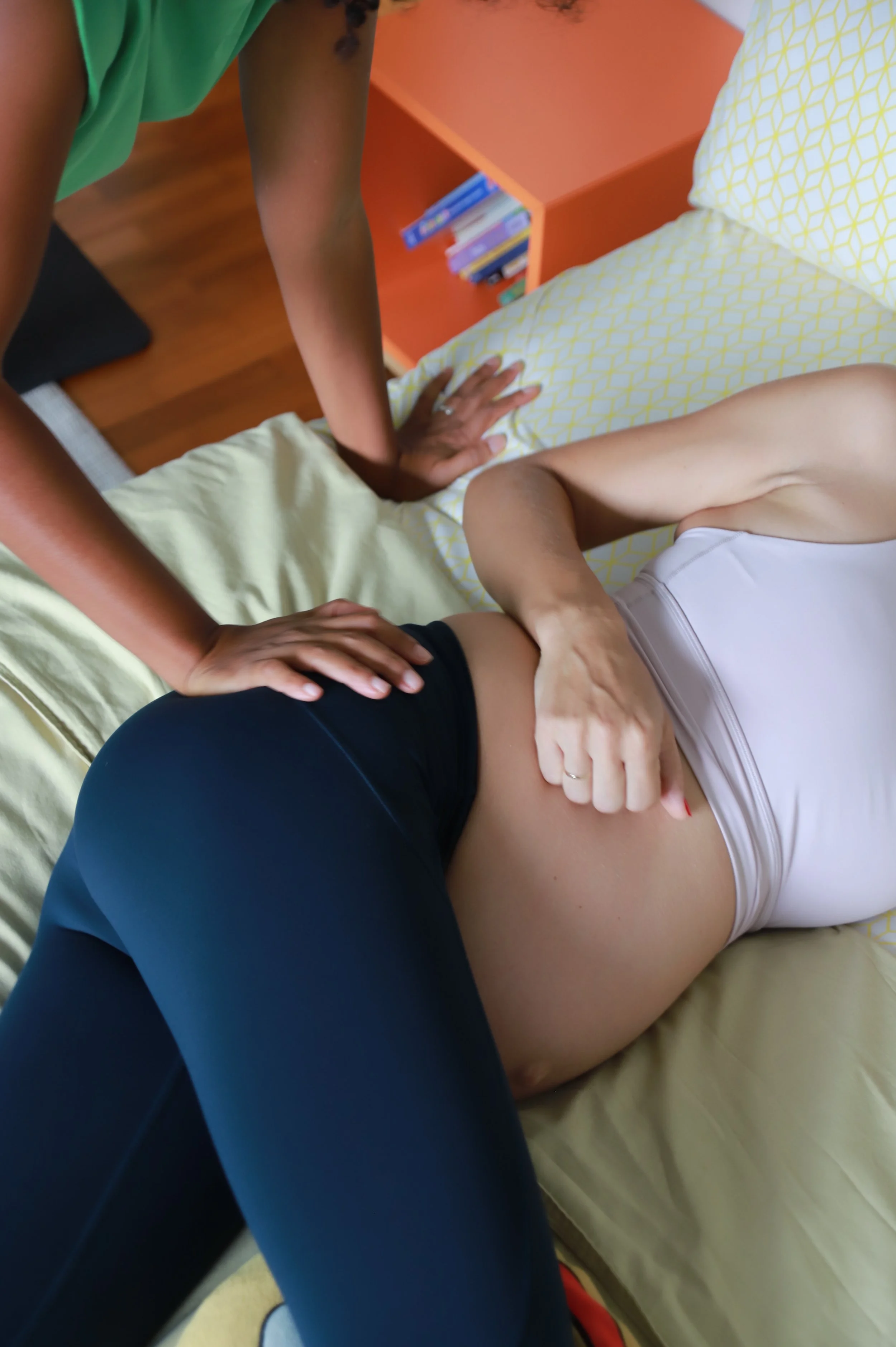
Counter-pressure is exactly what it sounds like firm, sustained pressure applied against a specific point on the body, usually the lower back or sacrum, during a contraction. It works because it competes with the pain signal your body is sending to your brain. When I press firmly into the sacrum during a contraction, many of my clients describe it as taking the edge off, or making the wave feel more manageable.
Where I apply it
Most often at the sacrum (the flat bone at the base of the spine) or the hips, but I'm always asking and adjusting every labouring body wants something slightly different, and what feels good in early labour might feel like too much by transition.
Birth Doula Sulin
Applying counter pressure in the hip area
The Hip Squeeze
The hip squeeze is one of the most requested techniques once a client has felt it once. I place my hands on the outer hips and squeeze inward and slightly upward during a contraction. It gently closes the pelvic outlet, which can ease pressure on the lower back and pelvic joints particularly helpful if baby is in a posterior position.
Why it helps
Eases lower back and hip pressure during contractions
Can be done standing, leaning over a bed, or on hands and knees
Easy to teach a partner in the room — this becomes something they can do too
Rebozo: A Traditional Tool I Use With Intention
The rebozo is a long woven cloth, traditionally used in Mexican midwifery, that I bring into labour support for movement and rhythm rather than pressure alone. I use it for sifting a gentle rocking motion with the cloth wrapped under the belly or hips and for supported hip squeezes when I want more leverage than my hands alone can give.
What rebozo sifting feels like: a rhythmic, rocking sway many clients say it's the first thing that helps them relax between contractions, not just during them.
Why Physical Presence Matters as Much as the Technique
None of these techniques work in isolation. What makes them effective is that I'm reading your body throughout labour watching how you're moving, listening to how your breathing changes, adjusting pressure and position continuously. This is part of what continuous labour support actually looks like in practice — it's not a technique applied once, it's presence sustained through hours.
An honest note on evidence: individual comfort techniques like hip squeezes and rebozo work haven't been studied in isolation through large trials — they're passed down through doula and midwifery practice and refined by what labouring people consistently report as helpful. What the research does show clearly is the value of continuous, hands-on labour support as a whole. The Cochrane Review (Bohren et al., 2017), covering 26 trials and over 15,000 women across 17 countries, found continuous labour support was associated with a 25% reduction in caesarean rates, roughly 40 minutes shorter labour on average, and lower rates of negative birth experience. These are population-level associations, not individual guarantees but they're the strongest evidence we have for why this kind of support matters.
In Singapore hospital rooms: whether you're birthing at Thomson Medical Centre, Mount Elizabeth Novena, Mount Elizabeth Orchard, Gleneagles, or NUH, Raffles Hospital, KKH these techniques travel with us they don't require special equipment, just space to move and a willing pair of hands. I always check the room layout with you in advance so we know what's possible.
Teaching These to Your Partner
I'm not there to replace your partner in the room I'm there alongside them. Part of my role is teaching your partner these techniques during prenatal visits, so they feel confident using them too, and so there are more hands available when labour is long. Many partners tell me afterwards that learning the hip squeeze was the thing that made them feel genuinely useful in the room, rather than standing by unsure what to do.
"Your birth is yours — my hands are just one more tool in a room built around what you need."
Frequently Asked Questions
-
Counter-pressure is firm, sustained pressure applied to a specific point on the body usually the lower back or sacrum during a contraction, to help ease the sensation of pain. It works by competing with the pain signal and is one of the hands-on techniques I use throughout labour support in Singapore.
-
A hip squeeze involves pressing the hips inward and slightly upward during a contraction to gently close the pelvic outlet. Many people find it eases lower back and hip pressure, particularly when a baby is positioned posterior, and it's easy to teach a partner so they can help too.
-
Individual techniques like hip squeezes haven't been studied in large isolated trials, but they're consistently reported by labouring people as helpful for managing sensation. What is well evidenced is the broader impact of continuous labour support, which the Cochrane Review associates with shorter labours and fewer negative birth experiences.
-
Absolutely teaching your partner is part of what I do in prenatal visits. I want them to feel confident using counter-pressure and hip squeezes themselves, so there are more hands available and they feel genuinely involved rather than sidelined.
-
No special equipment is needed for counter-pressure or hip squeezes. For rebozo work I bring my own cloth. These techniques work in any hospital room, whether you're birthing at Thomson Medical Centre, Mount Elizabeth Novena, Mount Elizabeth Orchard, Gleneagles, or NUH we simply work with the space available.
-
I adjust technique to the phase of labour and what your body is asking for often starting with gentler rebozo sifting in early labour and moving to firmer counter-pressure or hip squeezes as contractions intensify. Read more about how I support the different phases in how your birth environment shapes labour.
Curious what continuous, hands-on support could look like for your birth?
Let's talk about your birth, your questions, and whether we're the right fit.