
When birth didn't go the way you hoped! This is for you.
If you are reading this because your birth left you with something you did not expect not just a baby, but a heaviness, a confusion, a grief you cannot quite name I want you to know that I wrote this for you. Not for the version of you that is supposed to be glowing. For the real one. The one who is still trying to make sense of what happened.
Over the years, women have shared their birth stories with me. Not the edited versions the real ones. The ones they were afraid to say out loud because they thought no one would understand, or because they felt they should just be grateful their baby was healthy, or because the people around them had already moved on.
Those stories are part of why I do this work. They live in me. And they are why I believe, with everything I have, that every woman deserves to feel held, heard, and powerful in her birth whatever shape that birth takes.
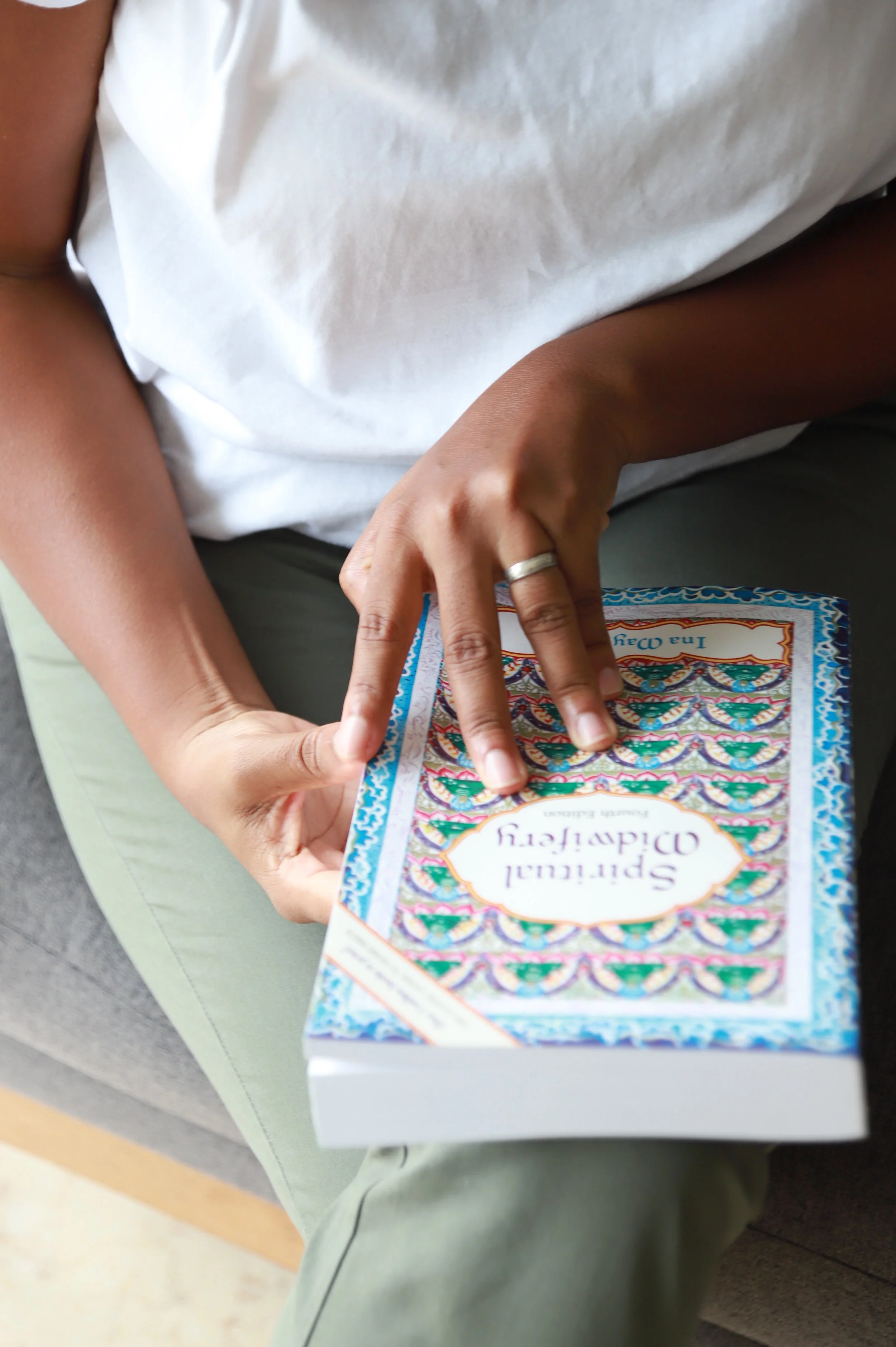
Why I became a doula
My own birth was not what I had planned. And yet — it was the most powerful, intense, lifting and beautiful experience of my life. Not because everything went perfectly. But because I felt present in it. I felt like I had agency inside it. I was not a passenger in my own birth story.
That feeling of being empowered inside an experience that is completely beyond your control is what I want for every woman I support. And when I began to hear how many women had experienced the opposite of that, I knew I had found my purpose.
Papaya Wellness exists for the woman who deserves to feel powerful in her birth. And it also exists for the woman who did not and needs someone to acknowledge that.
If any of this sounds familiar, keep reading.
Birth trauma and negative birth experiences are more common than we talk about. Research suggests that around one in three women describe their birth as traumatic in some way. In Singapore, where the caesarean rate in private hospitals is among the highest in the region and where births happen in busy hospital settings with nursing staff rotating every eight hours the conditions for feeling unseen, rushed, or uninformed are very real, even when the clinical care itself is excellent. A woman can be in a well-resourced hospital like Thomson Medical Centre, Mount Elizabeth, or Gleneagles and still feel completely alone in her labour. The quality of the medical environment and the quality of the emotional experience are two entirely different things.
Here are some of the experiences women have shared with me. You may recognise yourself in one of them, or in all of them.
Experience one
You were surrounded by people and completely alone.
The room was full. Nurses, equipment, your partner trying their best. And yet at some point during your labour, you looked around and realised that no one was truly with you. Not in the way you needed. The nurses had other patients. Your partner did not know what to do. Your ob-gyn arrived near the end. You moved through the hardest hours of your life without anyone who was simply and completely there for you — and part of you is still carrying that.
Experience two
You said something, and no one really listened.
Maybe you asked a question and did not get a real answer. Maybe you said you were scared and it was brushed past. Maybe a decision was made about your body and your birth without anyone pausing to explain it to you first, or check whether you understood, or ask how you felt about it. You were managed, not heard. And the difference between those two things matters enormously and you felt it.
Experience three
Something happened that frightened you, and no one helped you make sense of it.
An emergency. A sudden change in plan. An intervention you did not expect. Things moved fast, clinical language flew around the room, and you were left to absorb it all in real time while also being in the middle of labour. No one sat with you afterward to explain what had happened, why it happened, or what it meant. You were discharged with a baby and a story you still do not fully understand.
Experience four
Your birth went nothing like you had imagined and the grief of that surprised you.
You had a plan, or at least a hope. A natural birth that became a caesarean. An unmedicated labour where you needed an epidural and felt like you had failed. A birth you had visualised and prepared for that unfolded in an entirely different direction. And then came the guilt of grieving it because your baby is here and healthy, and you feel like you are not supposed to feel sad about how they arrived. In Singapore this pressure can be particularly sharp. There is a cultural expectation to move swiftly into gratitude and recovery. The confinement period begins, routines take over, visitors arrive, and the birth itself is rarely spoken about again. But you do feel something. And that grief is real, whether or not anyone around you has made space for it.
“Your feelings about your birth are not an overreaction. They are not ingratitude. They are a valid response to an experience that did not give you what you needed and you are allowed to name that.”
What I want you to know and what the research confirms
Birth trauma is not about what objectively happened. It is about how the experience was felt. Two women can have the same clinical birth and one walks away empowered and one walks away shattered — and both responses are completely valid. What determines the emotional experience of birth is not the medical outcome. It is whether the woman felt safe, supported, informed, and respected throughout it.
This is not a soft or sentimental observation. It is what the evidence consistently shows. Studies on birth trauma find that the most significant predictors of a negative birth experience are not complications or pain they are feeling out of control, feeling unheard, and feeling alone. These are relational failures, not medical ones. And they are preventable.
That is precisely what continuous doula support addresses. Not by preventing complications. But by ensuring that no woman moves through her labour without someone whose sole purpose is to be present with her informed, calm, and entirely on her side.
It can be different. I have seen it.
If you are pregnant again after a difficult birth, or planning your first birth and carrying the weight of someone else's story, I want to offer you something real: the next birth does not have to feel the way the last one did.
Not because I can control what happens. No one can. But because when you are prepared when you know your options, when your wishes are known and advocated for, when you have someone beside you who will not leave - the experience of birth changes. Even when the birth itself is hard. Even when it does not go to plan. You can still feel powerful inside it.
I have sat with women who came to their second birth terrified, shaped entirely by what their first had done to them. And I have watched them move through that birth differently — not because it was easier, but because they were not alone in it. That shift is everything.
That is what I am here for. Not to promise you a perfect birth. To promise you that you will not go through it alone.
Because here is what I believe with everything I have: every woman deserves to feel supported on the day she celebrates her baby entering the world. That day — the day you do the most intense, the most powerful, the most extraordinary thing you will ever do — is not a day you should move through feeling invisible. You deserve to be held in it. Fully. By someone who is entirely, unconditionally there for you.
That is the heart of why Papaya Wellness exists. And it is the promise I make to every family I work with.
If you are still processing a birth that hurt you
Whether you are newly postpartum or your difficult birth was months or years ago — if you are still carrying it, please know that support exists.
Talk to professional about how you are feeling postpartum. Be honest — more honest than you think they have time for.
A birth debrief conversation with a doula who understands birth deeply can help you process and make sense of what happened. I offer this. You do not need to have been my client to reach out.
And if you are not ready to talk to anyone yet that is okay too. Sometimes just reading that your experience was real, and that it matters, is the first step.
Questions I am often asked about difficult birth experiences
-
A traumatic birth is any birth that the woman experienced as frightening, overwhelming, or deeply distressing regardless of the clinical outcome. It does not require a medical emergency. Feeling alone, unheard, out of control, or having decisions made without your understanding or consent can all result in a traumatic birth experience. If your birth left you with a heaviness or distress that has not lifted, that is worth taking seriously.
-
Yes — completely and entirely. The health of your baby and the quality of your birth experience are two separate things. Grieving a birth that did not go the way you hoped, or that left you feeling unsupported or powerless, is a valid and human response. It does not mean you are ungrateful. It means you are processing a real loss.
-
Yes — and this is one of the situations where doula support can make the most meaningful difference. A doula who knows your previous experience can help you prepare differently and ensure you have continuous, informed support throughout your labour. Many women describe their second birth — supported by a doula — as genuinely healing, even when it was also medically complex.
-
A doula cannot prevent all difficult outcomes, but they can significantly reduce the relational factors that cause birth trauma. These include feeling alone (a doula stays continuously), feeling unheard (a doula helps you communicate for your wishes), feeling confused (a doula explains what is happening in real time), and feeling powerless (a doula helps you understand your options so you can make informed choices). These are the factors that most consistently shape whether a birth feels traumatic or empowering.
-
Singapore's private hospitals offer excellent clinical care, but the system is not structured for continuous emotional support. Nurses rotate shifts every eight hours, obstetricians typically arrive for the final stage of birth, and wards are busy. Singapore also has one of the highest caesarean rates in Asia — meaning many women experience unexpected interventions without adequate preparation or explanation. These systemic factors, combined with pressure to be grateful and move on quickly, mean that many women leave their birth carrying something unprocessed. It is not a failure of the hospitals — it is a gap that continuous doula support is specifically designed to fill.
-
Sulin supports families at Thomson Medical Centre, Mount Elizabeth Novena, Mount Elizabeth Orchard, Gleneagles, and NUH (National University Hospital). If you are delivering at a different hospital, reach out — in most cases it can be arranged.
-
You can find birth trauma support in Singapore through:
Public hospitals: Perinatal mental health services at KKH, NUH and SGH (ask your GP or obstetrician for a referral and mention “birth trauma” or “postpartum PTSD”).
Private therapists: Trauma‑informed psychologists and counsellors who work with PTSD, medical/birth trauma, and postnatal mental health (your GP or OB can refer you).
Doulas and birth debriefs: Some doulas — including myself at Papaya Wellness — offer birth debrief conversations: a supported space to tell your birth story and begin to make sense of it.
Helplines: Services like Samaritans of Singapore and AWARE can provide immediate emotional support and point you toward longer‑term help.
You deserve to feel powerful in your birth.
Whether you are preparing for a first birth, a birth after a difficult experience, or you simply want to know that someone will be entirely in your corner — I would love to have a conversation. No pressure. No obligation, available in English, Spanish & French. Just a real talk about where you are and what you need.