
Postpartum Bleeding (Lochia) A Doula’s Guide for New Mums in Singapore
Nobody really prepares you for how much your body continues to do after your baby is born. The birth is over, but your body is still very much at work. Postpartum bleeding, known as lochia, is one of the most common things new mums in Singapore ask me about, and also one of the least talked about before birth. So let's change that.
Whether you had a vaginal birth or a caesarean section, lochia is a normal and healthy part of your recovery. It's your body's way of shedding the blood, tissue, and mucus that lined your uterus throughout your pregnancy. Understanding what's normal — and what isn't — means you can rest and heal with confidence instead of worry.
How long does postpartum bleeding last?
For most new mums, lochia lasts around 4 to 6 weeks, gradually tapering as your uterus heals. Some women notice a sudden increase even a few weeks in this is often your body's way of telling you that you've been doing too much. It's not unusual, but it is a signal worth listening to. Slow down, rest more, and let your body catch up.
What Are the Stages of Lochia?
Lochia changes over time, moving through three stages:
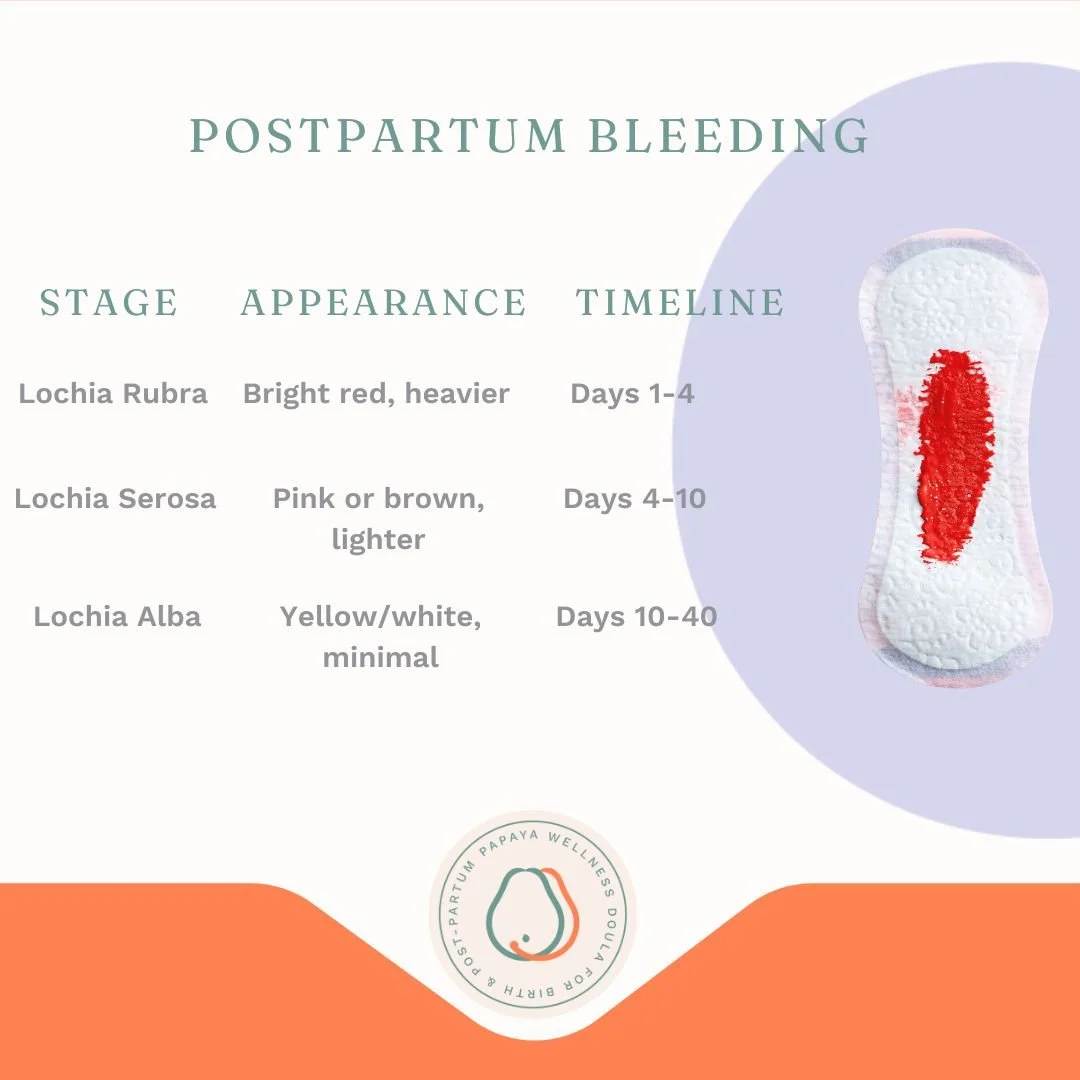
Each stage signals your healing progress. Some mums may notice lochia stopping and starting again, or changes in color this is usually part of the normal cycle.
What's normal — and what's not
Normal lochia includes heavier flow in the first few days that gradually lightens, small clots no bigger than a coin, mild cramping, and color changes across the stages above. All of this is your body doing exactly what it should.
When to call your doctor or midwife
Soaking more than one pad per hour for two consecutive hours
Clots larger than a plum
Bleeding accompanied by fever, chills, or a foul smell
Sudden return of bright red bleeding after it had slowed
Severe pain or dizziness alongside heavy bleeding
In Singapore, most clinics and hospitals are well-equipped to guide you on next steps even if you're not sure whether something is serious, it's always okay to call and ask. That's what they're there for.
Why does bleeding sometimes increase after activity?
Physical exertion walking more than usual, climbing stairs, lifting, or even an emotionally demanding day can temporarily increase bleeding. This is your body's way of asking you to pace yourself. If the bleeding increases and doesn't settle back down with rest, that's worth noting to your care provider.
Can breastfeeding affect lochia?
Yes and in a helpful way. Breastfeeding triggers the release of oxytocin, which encourages uterine contractions and can actually help reduce bleeding and speed up healing. You might notice a brief increase in flow right after nursing this is normal and usually settles quickly.
Practical tips for managing lochia at home
These are the things I share with every postpartum client I support in Singapore:
Use thick, comfortable maternity pads avoid tampons or menstrual cups until your body has fully healed and your care provider has given the go-ahead.
Rest as much as you realistically can, especially in the first two weeks. Bleeding that increases when you overdo it is your body asking you to stop.
Stay hydrated and nourished healing takes energy, and your body needs fuel.
Track any changes in flow, color, or smell. A simple note on your phone is enough. It gives your doctor or doula useful information if something feels off.
Ask for help. The postpartum period is not the time to prove you can do it all. You deserve support — and accepting it is one of the best things you can do for your recovery.
Doula note
Every postpartum journey is different. Some mums breeze through this stage; others find it more uncomfortable or worrying than expected. Both are valid. What matters is that you feel informed, supported, and never alone in figuring it out. If something feels wrong, trust that instinct and reach out.
People also ask about postpartum bleeding
-
Lochia begins immediately after birth and changes color over weeks as your uterus heals. Your first period postpartum typically returns weeks to months later, often longer if you're breastfeeding. If you're unsure which is which, your care provider can help you distinguish the two.
-
Lochia occurs after both vaginal and caesarean births your uterus sheds its lining regardless of how your baby arrived. Some mums find lochia is slightly lighter after a caesarean because some tissue is removed during surgery, but the timeline and stages are generally similar.
-
Yes it's very common, especially if you've been more active. Lochia slowing down and then picking back up with increased activity is your body's signal to rest. If the bleeding becomes heavy again or comes with other symptoms, check in with your care provider.
-
Go to A&E or call your hospital if you are soaking through pads rapidly, passing very large clots, experiencing severe pain or dizziness, or have a fever alongside heavy bleeding. KKH and Thomson Medical both have 24-hour maternity emergency support.
You don't have to navigate the postpartum period alone.
As a postpartum doula in Singapore, I'm here to support your recovery practically and emotionally. If you have questions or want to talk through what postpartum support could look like for your family, I'd love to connect.